A battery alarm arrives: what should the shift operator check?
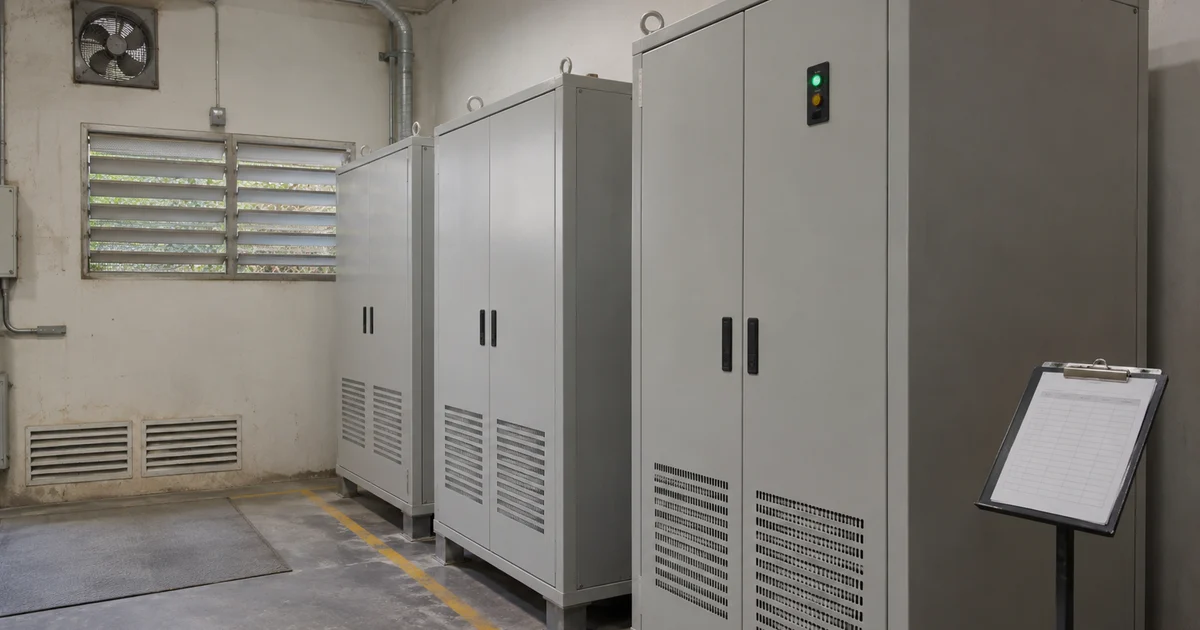
Summary: Separate communication loss, power restriction and safety alarms. SOC on a screen is not evidence of battery safety.
Generated illustrative scene, not a real project photograph or a wiring demonstration.
Save the original BMS alarm, time, equipment ID and state. Check whether PCS and EMS received the same message. Distinguish cell, rack and system alarms. After communication loss, the last SOC may be stale and unsuitable for assessing available capacity.
Observe only from a safe location. Smoke, abnormal heat, sounds, irritating odours or other emergency signs require withdrawal and the battery supplier/site emergency plan. Do not open cabinets, touch batteries, force-clear interlocks or attempt to resume charging.
Compare VGRID PCS charge/discharge limits with BMS permissions and event time. Send relevant logs and versions to the responsible team and manufacturer. Authorized personnel approve recovery; disappearance of an alarm alone is not fault clearance.
Related reading
SOC, DoD and C-rate: battery state and current
References (check scope against local requirements)
FAQ
Can charging continue if SOC looks normal?
SOC alone is insufficient. Check BMS alarms, charge permission and site safety conditions.