Electrical thermal inspections need load records, not just red pixels
Summary: A change of image colour does not by itself show deterioration. Keep the scale, load and viewing conditions together.
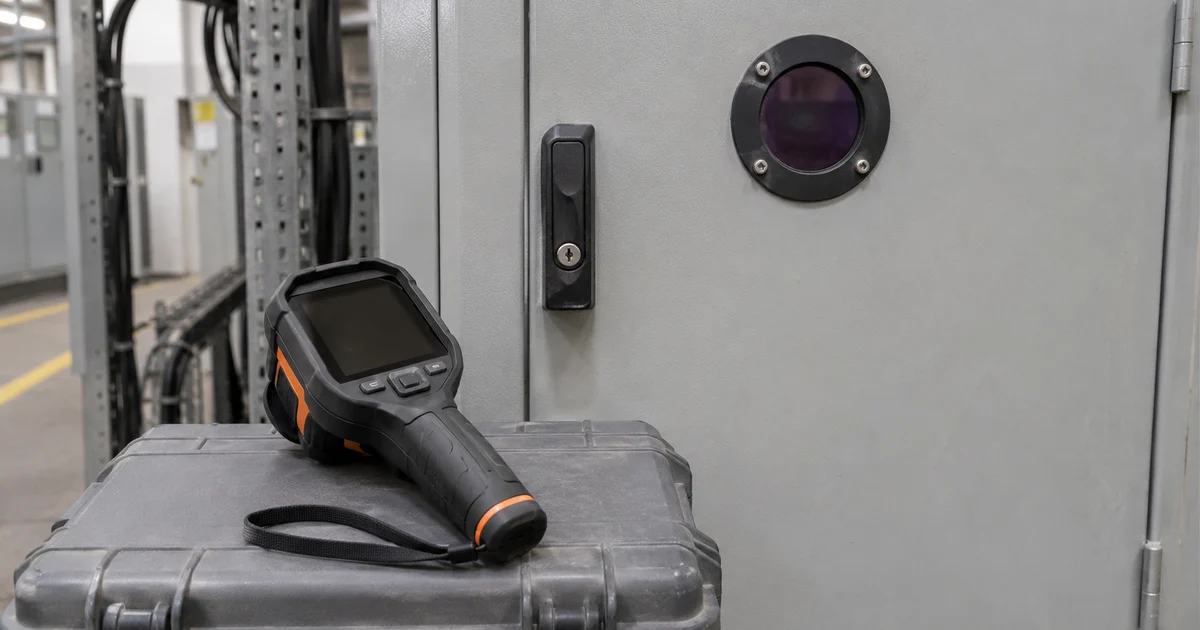
Generated illustrative scene, not a real project photograph or a wiring demonstration.
Save the original thermal file with time, ambient conditions, equipment ID, load and settings. Compare equivalent points under comparable conditions. Metal reflections, viewing angle and emissivity affect apparent temperature. Never touch a connection to confirm an image.
Use approved inspection windows or remote methods where provided. Opening energized cabinets is not an ordinary walk-round task: qualified personnel need risk assessment and authorization. An anomaly calls for review, not live tightening based on colour.
For VGRID projects, link each point to PCS trends and circuit identifiers. Limits and response priorities come from applicable standards, component instructions and site assessment, not one invented temperature for the whole system.
Related reading
Efficiency η and losses: what does 95% actually describe?
References (check scope against local requirements)
FAQ
Is the reddest spot necessarily faulty?
No. Check scale, load, reflections and measurement conditions before professional assessment.