A 1 MW, 1.5 MW or 2 MW target describes the required system output; it does not by itself determine the number of cabinets. A defensible design starts with the load profile, the selected cabinet’s continuous active-power rating, power factor, operating mode and required redundancy.
Build the system around AC and DC buses
A typical storage path is battery DC bus ↔ bidirectional PCS cabinets ↔ AC bus → loads. The utility grid and diesel generator connect to the AC system through project-rated switchgear and protection. PV may connect through a hybrid cabinet’s integrated MPPT, a separate PV inverter, or a separately engineered DC/DC stage. These alternatives are not interchangeable; the single-line diagram must show the selected path.
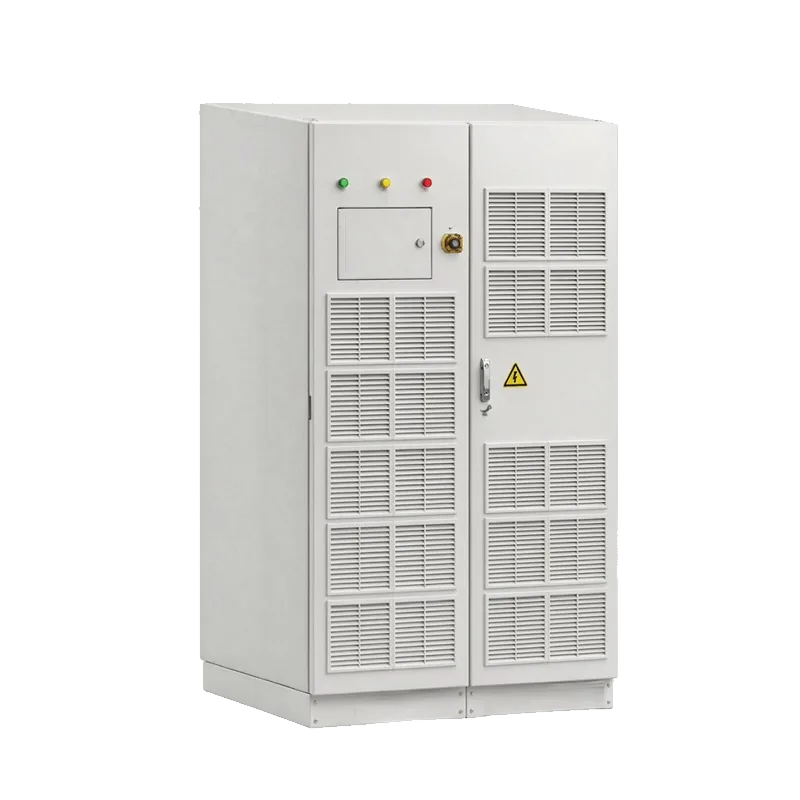
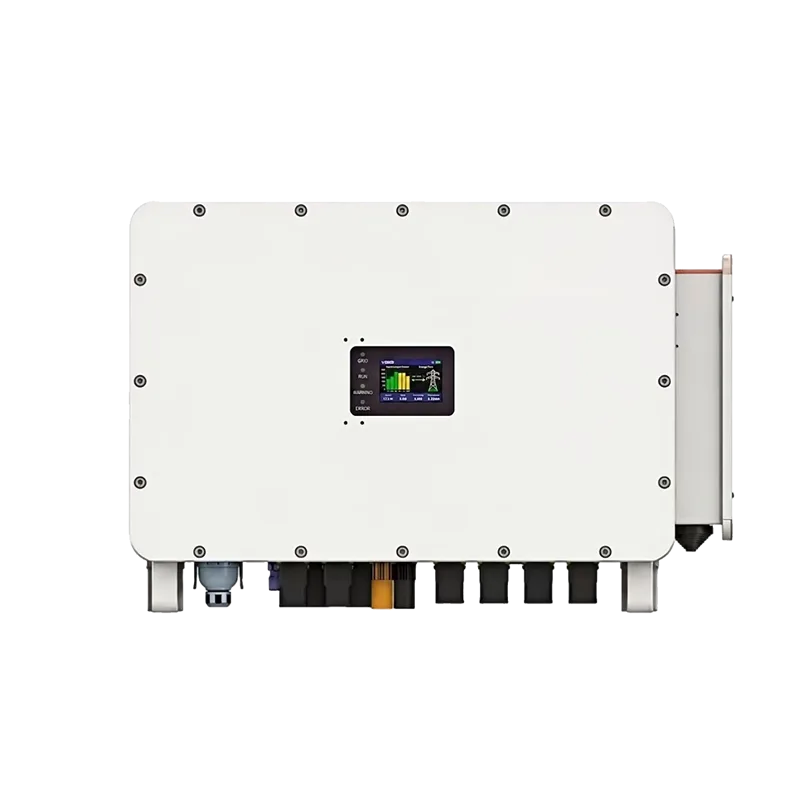
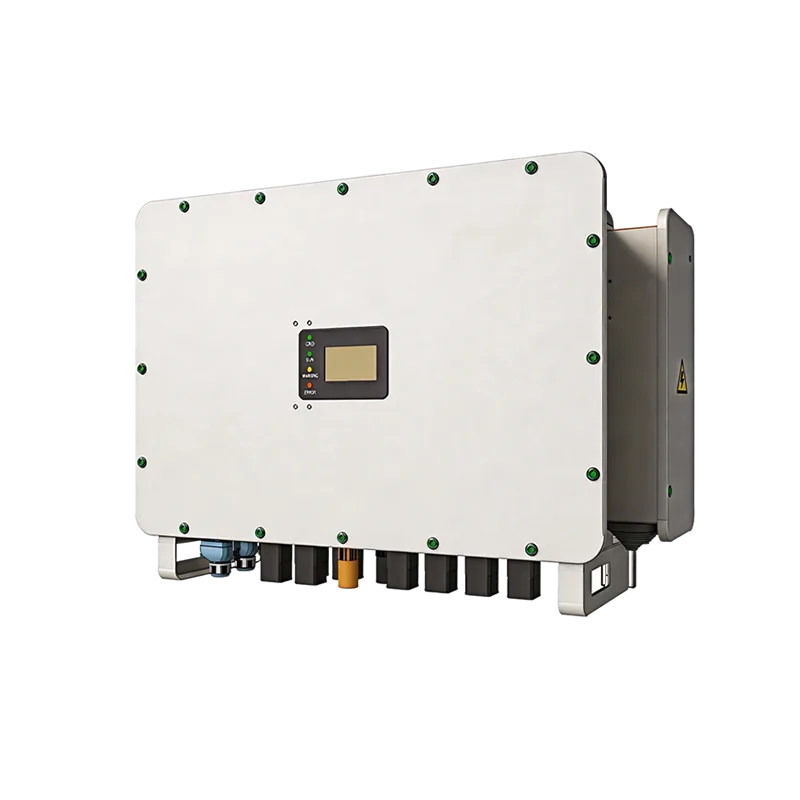
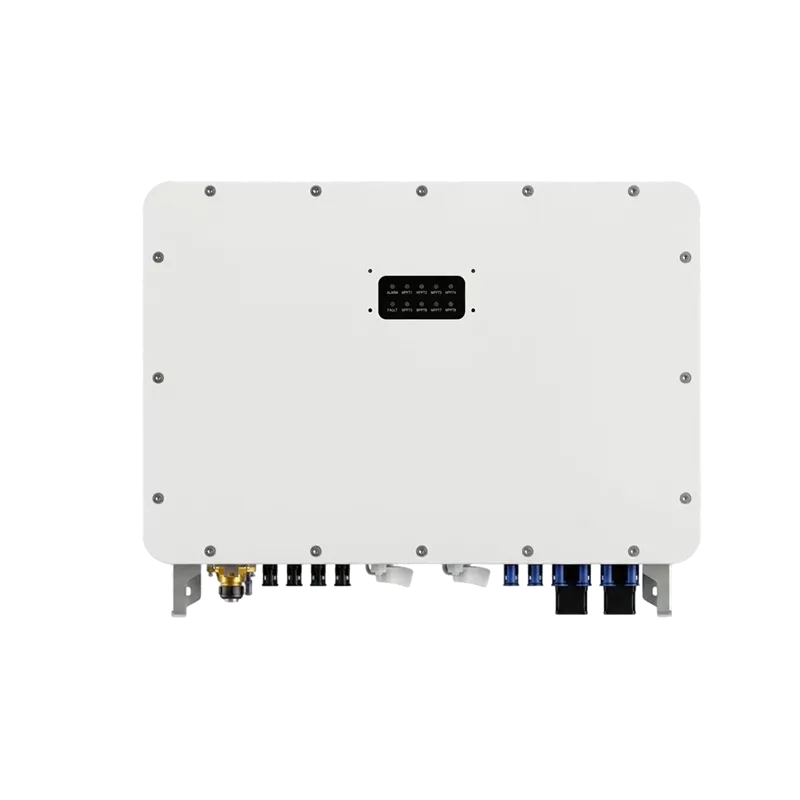
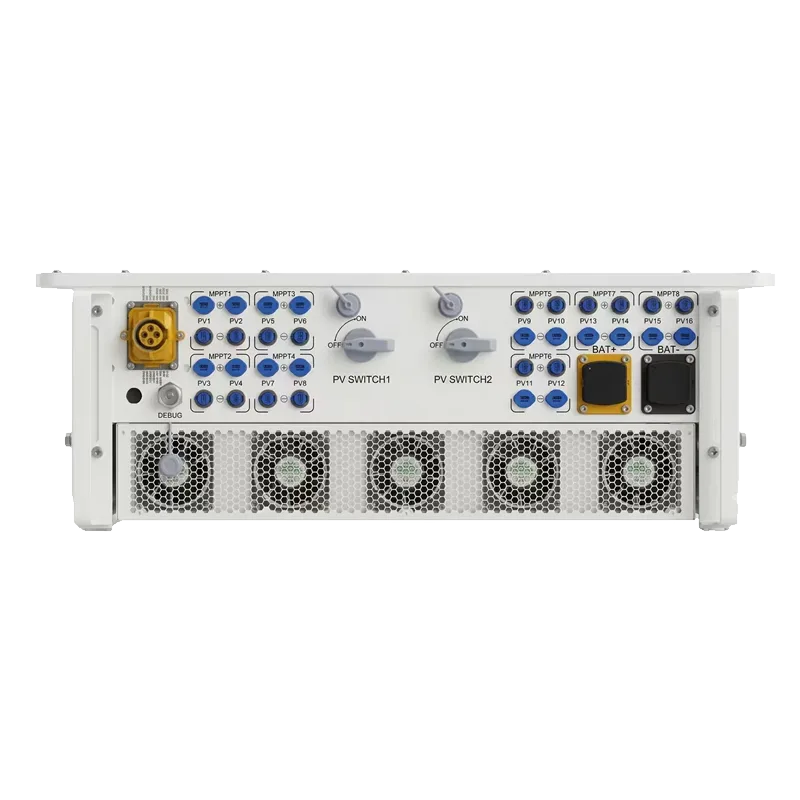
VGRID’s LEONA-B750K is a split-type, grid-forming hybrid inverter and energy-storage conversion system in the 750 kW class. It integrates PCS, EMS, an isolation transformer and automatic grid/off-grid switching; PV MPPT controllers are selected separately. The brochure lists 750 kVA rated off-grid apparent output and 825 kVA maximum output. It illustrates three cabinets in a 2.25 MW parallel design, but final cabinet count, active output and protection must be confirmed for the project. SP250HAG2T is a 250 kW class hybrid cabinet with integrated PV MPPT and a specified maximum of three parallel units. For SP375HAG2 and SP500HAG2, confirm active and apparent ratings in the configuration-specific datasheet.
What determines the cabinet count?
Use the continuous active-power rating available at the required power factor and site conditions, then account for peak demand, motor starts, ambient-temperature derating, battery current, maintenance strategy and any N+1 requirement. Apparent-power and current limits can bind before the headline kW figure. The final design must also verify that firmware, parallel controller, communications, transformer impedance and protection settings are compatible across cabinets.
Example capacity targets
For a 1 MW target, assess whether the selected cabinet combination can continuously deliver at least 1 MW at the project power factor, including derating and reserve. Repeat the same check for 1.5 MW and 2 MW; do not assume that a simple arithmetic sum is the usable site output. If a 750 kW cabinet is selected, two cabinets have a nominal arithmetic sum of 1.5 MW active power, but the approved system output still depends on parallel limits, load profile, protection, battery capability and project confirmation.
Design information to provide before quotation
- Hourly and peak load profile, largest motor, starting method and critical-load list.
- Required continuous active power, power factor, overload duration and redundancy.
- Battery chemistry, usable energy, DC voltage range, charge/discharge current and autonomy.
- PV capacity, string voltage/current and whether AC or DC coupling is preferred.
- Grid voltage, fault level, import/export rules and islanding requirements.
- Generator rating, voltage, frequency, minimum loading and synchronization requirements.
- Transformer, grounding, short-circuit, protection, transfer-time and local-code requirements.
- Ambient temperature, altitude, enclosure and service-access conditions.
When to choose a hybrid cabinet or a PCS cabinet
Choose an integrated hybrid cabinet when its built-in PV conversion, transfer equipment and controls match the project. Choose a PCS-centred architecture when PV conversion is external or the project needs a larger, separately engineered AC system. Request the model-specific datasheet, interface drawing, parallel-control statement and certificates available for the offered configuration. Compare SP250HAG2T, SP375/500HAG2 and LEONA-B750K.
FAQ
How many PCS cabinets are needed for a 1 MW, 1.5 MW or 2 MW system?
The count depends on the verified continuous active-power rating of the selected cabinet, power factor, redundancy target and control compatibility. Do not calculate cabinet count from a model name alone; use the final datasheet and single-line design.
Can LEONA-B750K cabinets be paralleled?
Multi-cabinet parallel operation is supported. The maximum count and total system rating must be confirmed for the selected controller, protection scheme and project.
Can PV, batteries, grid and diesel generators share one microgrid?
They can be coordinated in an engineered system. PV conversion, battery DC voltage, generator interface, transfer equipment, protection and EMS dispatch logic must be specified together.